How to Price Shipping Without Losing Margin
By Catherine Taylor · Published · 4 min read
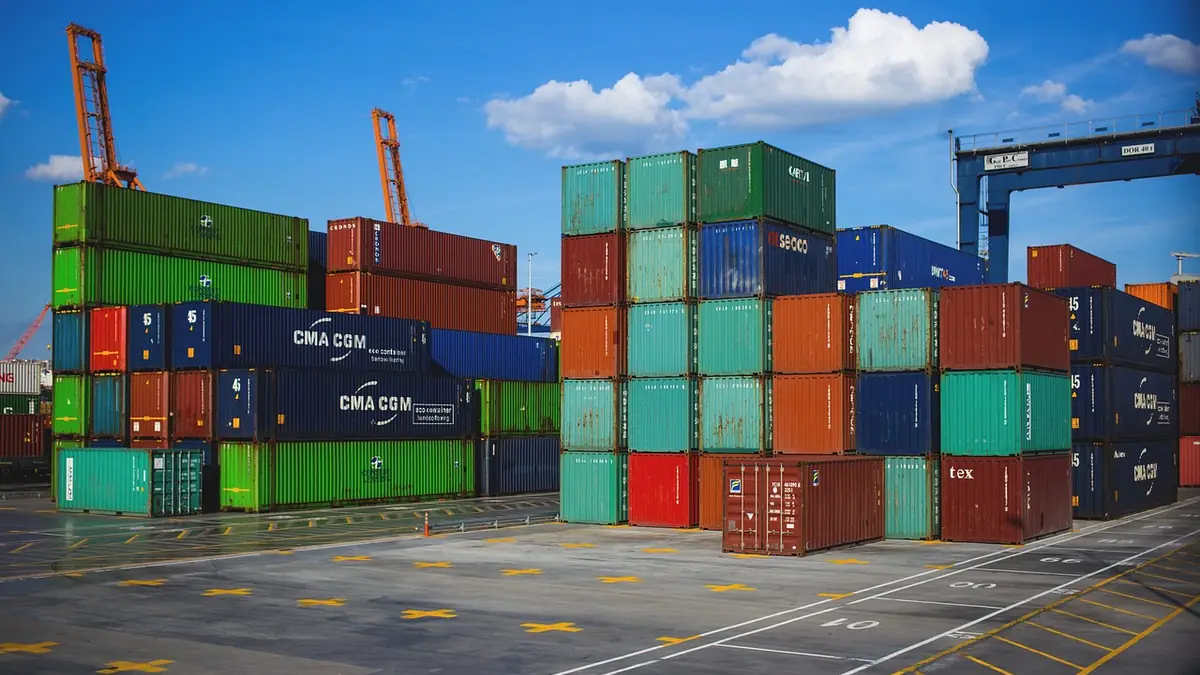
Shipping is the line item most online stores get wrong. Charge too much and checkout abandonment climbs; charge too little and a 30% gross margin quietly turns into 12% after the courier invoice lands. The fix is not a single rate but a structure: a threshold, a blended cost model, and a small set of rules that hold when parcel prices move.
This guide walks through the numbers an operator actually needs — average parcel cost, packaging, the share of orders that cross a free-shipping line, and the margin left after both. Everything here assumes you already know your product margin and your acquisition cost, so the work is about isolating shipping as its own profit centre rather than a rounding error.
Start With Your True Landed Shipping Cost
Most merchants quote the courier label and stop. The real cost per parcel includes the label, packaging (typically $0.40–$1.20 for a mailer or box), pick-and-pack labour (often $1.50–$4.00 per order at small volumes), and a returns allowance. Add them before you set a single customer-facing price, because a $6.90 label is rarely a $6.90 cost.
Build this per shipping band, not per store. A store selling candles and one selling desk lamps face very different dimensional weight maths. Split orders into three or four weight or size buckets and calculate average all-in cost for each. That table becomes the foundation for every threshold and surcharge decision you make.
Review it quarterly. Carrier surcharges for fuel, residential delivery and peak season move several times a year, and a threshold set against last spring's rates is usually the reason margin slips by autumn.
- Label cost + packaging + pick labour + returns allowance = true cost
- Calculate per weight or size band, not one store-wide average
- Re-check against carrier rate changes at least quarterly
Set a Free-Shipping Threshold Using AOV, Not Instinct
A free-shipping threshold works when it sits modestly above your current average order value. If AOV is $52, a threshold of $65–$75 pulls a meaningful share of customers to add one more item, while a threshold of $120 simply reads as 'no free shipping' and converts worse than charging a flat fee.
The mechanics matter more than the number. A threshold lifts AOV only if customers can find a cheap add-on quickly — a $9 accessory near the cart, a bundle suggestion, a progress bar showing the gap. Without those prompts, the threshold filters out small orders rather than growing them.
Model the trade before you launch. If 40% of orders cross the line and each of those orders absorbs $7 of shipping, you have given away roughly $2.80 per order across the whole business. The threshold only pays if the AOV lift on converted orders exceeds that figure, so track both numbers for eight weeks.
- Place the threshold 20–40% above current AOV
- Show a cart progress bar and a cheap add-on to close the gap
- Track threshold-crossing rate and AOV lift together
Price Shipping as a Blended Rate, Not Per Order
Customers compare the shipping charge to the product price, not to your cost. A flat rate of $5.95 on a $40 order reads as reasonable; the same charge on a $12 item reads as a penalty. Blended pricing spreads the real cost across the catalogue so no single SKU looks expensive to ship.
The simplest version is a flat fee per order plus a free line above the threshold. More precise is zone-based flat rates: one price for domestic standard, another for remote postcodes, another for expedited. Two to four tiers is enough; beyond that, customers stop reading and support tickets rise.
Keep heavy or bulky items out of the blend. A flat rate that averages a 300g parcel and a 12kg parcel will lose money on every heavy order, and the loss compounds as volume grows. Give oversized items their own surcharge and say so clearly on the product page.
| Structure | Typical charge | Cost as % of revenue | Effect on AOV | Best for |
|---|---|---|---|---|
| Flat fee per order | $4.95–$7.95 | 5–8% | Neutral | Stores with tight, similar parcel sizes |
| Free over threshold | $0 above $65–$90 | 6–10% | +8–18% on crossing orders | Stores with cheap add-on products |
| Zone-based flat rates | $4.95–$14.95 by zone | 5–7% | Neutral | Mixed domestic and remote delivery |
| Cost-plus (live rates) | Actual carrier rate | 3–5% net | Negative on small orders | High-ticket, low-volume catalogues |
| Subscription free shipping | $0 for members | 4–6% on member orders | +15–25% repeat rate | Consumables and repeat-purchase stores |
Where Shipping Quietly Eats Margin
The most common leak is the free-shipping threshold that is set once and never revisited while carrier costs rise. Others include expedited upgrades sold below cost, remote-zone orders that trigger surcharges invisible at checkout, and returns where the original outbound shipping is not recovered. Individually these look small; across a few thousand orders they are the difference between a healthy year and a flat one.
Subscription and repeat-purchase stores face a second leak: customers who split orders to stay under a threshold or to hit one. Check how often multi-parcel orders ship to the same address within a week — consolidating them is often free money.
- Threshold never updated after a carrier rate rise
- Expedited shipping priced below its actual premium
- Remote-zone surcharges absorbed silently
- Outbound shipping not recovered on returns
Test Before You Commit
Run threshold and rate changes as controlled tests, not site-wide switches. Split traffic so half sees the new structure for four to six weeks and compare conversion rate, AOV, and shipping cost as a percentage of revenue. A change that lifts AOV by 6% but drops conversion by 4% is usually a loss once you account for the lost contribution margin.
Watch the shipping-cost ratio as your headline metric: total shipping cost divided by net revenue. Well-run stores in mid-market categories typically land between 5% and 9%; above 12% is a structural problem, not a pricing tweak.
Before any test, confirm your unit economics hold under the new structure — the CAC versus LTV relationship on CAC vs LTV for online stores is the right frame for deciding how much shipping subsidy your margin can carry.
Make Shipping Part of the Growth Plan
Shipping policy shapes repeat purchase as much as acquisition. Predictable, simple rates build trust; surprise surcharges at checkout generate the abandonment you paid to earn. Treat shipping as a designed part of the offer, alongside price and delivery speed, rather than an afterthought bolted on at launch.
If shipping changes require outside help, budget realistically — rates for specialist support are covered in how much an ecommerce consultant costs in 2025 — and measure the payback period the way you would any other growth spend.
- Price shipping from fully landed cost, including packaging, labour and returns.
- Set the free-shipping threshold 20–40% above AOV and support it with add-on prompts.
- Blend rates across the catalogue but surcharge heavy or bulky items separately.
- Track shipping cost as a share of revenue; above 12% signals a structural problem.
Catherine has spent years advising small and mid-size online stores on pricing, margins and growth planning. She writes practical, number-driven guides so owners can make decisions without a finance background. Her focus is on turning everyday ecommerce data into clear next steps.